
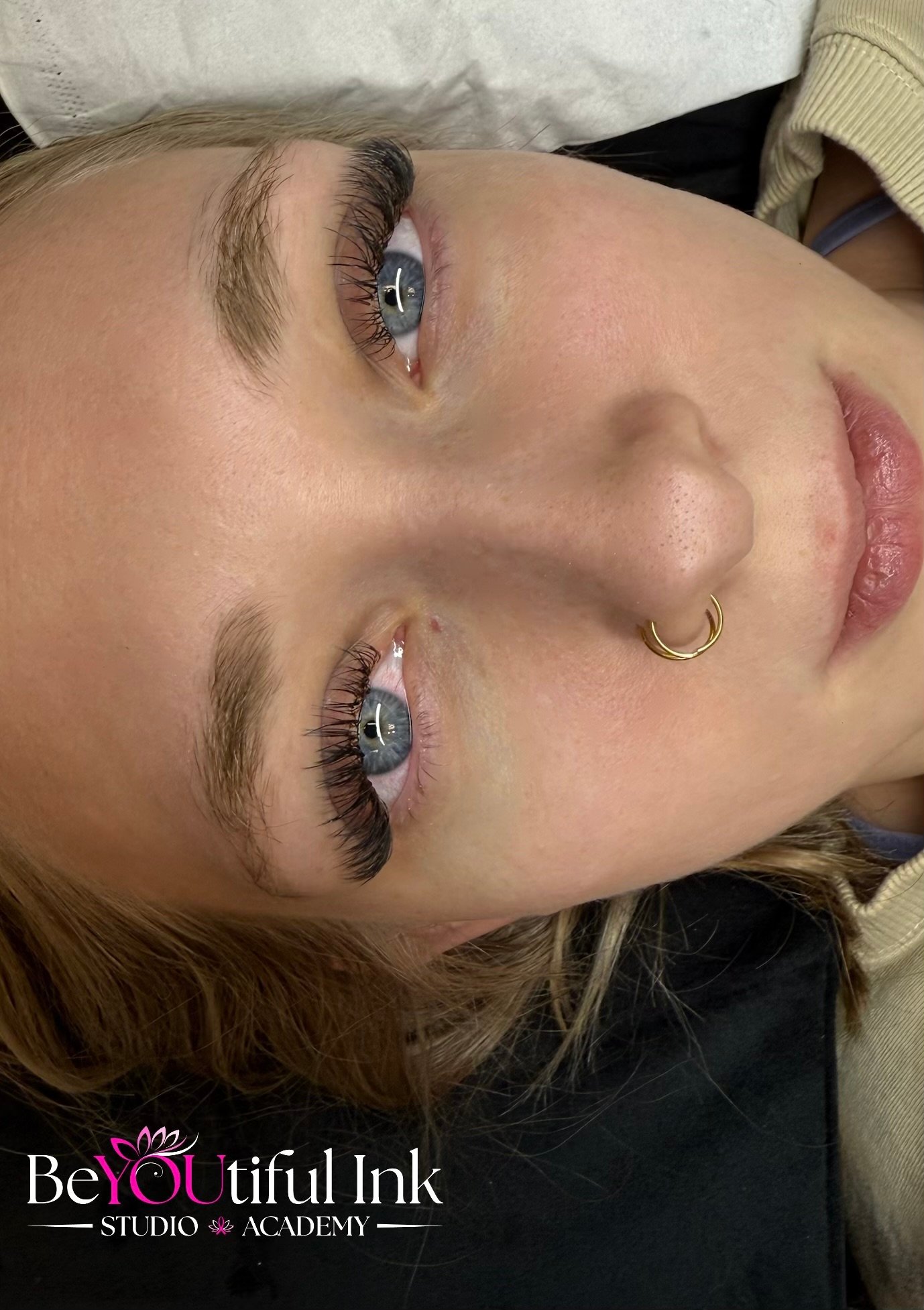
You take your extensions off, look in the mirror, and your natural lashes seem shorter, thinner, and sadder than you remember. It is the moment almost every long-term extension client has at some point. Worrying about lash extensions damaging natural lashes is one of the most searched questions in the whole industry, and it deserves a genuinely honest answer rather than a reassuring one from someone who sells lash sets. At BeYOUtiful Ink Studio in Little Falls, MN, we would rather you had healthy lashes and a smaller set than dramatic lashes and no lashes underneath.
Here is the short version. Properly applied extensions on a healthy lash line do not damage your natural lashes. Badly applied extensions absolutely do, and the damage is often invisible until it is significant. This post covers how to tell the difference on your own lashes, what actually causes the harm, and what to do if you already see the warning signs.
What healthy extensions should feel and look like
Start with a baseline, because plenty of clients have never experienced a properly applied set and assume discomfort is normal. Correctly applied extensions are weightless. You should not feel them, they should not tug when you blink, and they should never pull, sting, or itch. Each extension is attached to a single natural lash, roughly half a millimeter from the lid, never touching the skin. When you brush through them with a spoolie they should separate cleanly rather than moving in clumps. Shedding one to five extensions a day is completely normal, since your natural lashes shed on their own cycle and take their extension with them. If your set feels heavy, sticky, or crunchy, or if lashes come out in groups, that is not normal and it is worth raising immediately. Knowing this baseline is genuinely protective, because many people assume a bit of tugging or itching is simply part of wearing extensions. It is not. Discomfort is the earliest signal of lash extensions damaging natural lashes, and it shows up long before you can see any thinning in the mirror.
Warning signs your lashes are being damaged
There are specific signals, and catching them early matters. Look for natural lashes that are noticeably shorter or finer than they were when you started, particularly toward the outer corners where longer extensions usually sit. Watch for visible gaps or sparse patches along your lash line that do not fill in between fills. Pay attention if your lash line feels tender, itchy, or persistently irritated. Notice whether you are shedding far more than a few extensions daily, or whether extensions come off with a natural lash still attached at the base. Twisted, kinked, or bent natural lashes are a clear sign of weight problems. If removing a set leaves you with lashes that look stubbly and stunted rather than simply bare, lash extensions damaging natural lashes has already happened to some degree. A useful habit is photographing your bare lashes before your very first set, in good natural light and straight on. Almost nobody does this, and it is the single best reference point you can have. Memory is unreliable, and the change from lash extensions damaging natural lashes is gradual enough that comparing against a photo is far more accurate than comparing against your recollection.
What actually causes lash extensions damaging natural lashes
The damage almost never comes from extensions as a concept. It comes from four specific failures, and all of them are avoidable. The first and most common is weight, where extensions are too long, too thick, or too many fans are applied for the strength of the natural lash carrying them. A fine natural lash simply cannot support a heavy extension, and the follicle gives up. The second is stickies, where adhesive bonds two or more natural lashes together, so when one sheds naturally it rips the other out prematurely. The third is poor isolation, which is the underlying cause of stickies and happens when an artist works too fast or without proper magnification. The fourth is aggressive removal, whether that is a client pulling them off at home or a tech using excessive force. Each of these is a technique or behavior problem rather than an inherent risk of the service. It is worth adding that adhesive itself is rarely the cause of structural damage, though it can certainly cause irritation or allergic reaction in sensitive clients. When people describe lash extensions damaging natural lashes, they are almost always describing a weight or isolation problem rather than a chemical one. That distinction matters, because switching to a sensitive adhesive will not help a set that is simply too heavy.
Why weight is the biggest culprit
This deserves its own section because it is where most long-term harm originates, and it is usually driven by clients asking for a look their lashes cannot carry. A natural lash can safely support an extension of roughly its own weight, which in practice means a length no more than two to three millimeters longer than the natural lash and a diameter appropriate to its thickness. When clients request dramatic length or full mega volume on fine natural lashes, a technician who says yes is setting up traction alopecia, where constant tension on the follicle causes the lash to fall early and eventually stop growing back properly. It builds gradually over months, which is exactly why nobody notices until the damage is obvious. A good artist will refuse the set you asked for and explain why, and that refusal is the service working correctly rather than failing you. There is a reasonable middle ground in almost every case. Shorter lengths with a lifted curl often read as more dramatic than longer lengths that droop under their own weight, so you frequently get a better look and avoid lash extensions damaging natural lashes at the same time. Length is not the only route to impact, and a good artist will show you that rather than simply saying no.
Recovering lashes that have already been damaged
The reassuring news is that lash follicles are resilient and most damage reverses. Natural lashes run on a growth cycle of roughly six to twelve weeks, so a full turnover takes about three months. If you stop extensions entirely and let your lashes rest, most people see meaningful recovery within two to three months and full recovery by six. During that time, keep the lash line scrupulously clean, brush gently with a clean spoolie, avoid waterproof mascara and lash curlers, and be patient. A conditioning lash serum can help, though results vary and some formulas cause irritation, so patch test first. Traction alopecia that has persisted for years may not fully reverse, which is the honest caveat. If your lashes have been through repeated cycles of lash extensions damaging natural lashes, a genuine rest period is not optional. Resist the temptation to shortcut the break. Going back to extensions after three or four weeks because you cannot stand how your lashes look is understandable, but it interrupts the recovery before a single growth cycle has completed. Give it the full three months if you possibly can, and plan the break for a stretch without weddings or holidays so you are less tempted to cut it short.
Alternatives while your lashes recover
Taking a break does not mean going without definition, and this is where a lot of clients are pleasantly surprised. A lash line enhancement places fine pigment right at the base of your lashes, making the lash line look denser and darker without adding a single gram of weight to a natural lash. It is the ideal option during a recovery period, and many clients keep it permanently afterward because it makes subsequent lighter extension sets look fuller. A soft classic eyeliner achieves something similar with a little more definition. When you are ready to return to extensions, coming back on a classic mink set rather than straight back to volume gives your lashes the gentlest reintroduction. You can see the full range on our services page. A lash lift is another option people ask about during a break, and it can work well, though it is not entirely without stress on the lash since it chemically reshapes the hair. If your lashes are actively recovering from damage we would generally suggest waiting until they are in better condition before adding a lift into the mix. A tinted lash line combined with a good mascara is genuinely the gentlest route through a recovery period.
Choosing a lash artist who protects your lash health
The single biggest factor in whether you experience problems is who applies your lashes, so it is worth knowing what to look for. A good artist examines your natural lashes before recommending anything and tells you honestly what they can support. They use magnification and take their time, since proper isolation cannot be rushed, and a full set legitimately takes two hours or more. They will decline a set that is too heavy for you rather than taking the money. They check for stickies at every fill and remove any they find. They ask about your history, including any previous experience with lash extensions damaging natural lashes. If a studio offers a full set in under ninety minutes, promises unlimited length regardless of your lashes, or gets defensive when you ask about lash health, keep looking. Cheap and fast lash work is almost always cheap and fast because isolation is being skipped. Price is a reasonable proxy here, though not a perfect one. Proper isolation takes time, time costs money, and a set priced well below everything else in the area is usually being applied faster than it should be. That is the most common route to lash extensions damaging natural lashes that we see in clients coming from elsewhere.
Honest lash advice in Little Falls, MN and central Minnesota
If you are in Little Falls, MN or driving in from Brainerd, St. Cloud, Wadena, or elsewhere in Morrison County, we are happy to assess your natural lashes and tell you plainly what condition they are in. Plenty of clients come to us from other studios specifically because they suspect something is wrong, and sometimes the honest answer is that you need a break rather than a fill. We will tell you that even though it costs us a booking, because a client whose lashes recover is a client for years. Kelly designs sets around what your natural lashes can genuinely carry, which often means a slightly lighter look than you had in mind and a far better outcome twelve months on. Clients across central Minnesota tell us this is the first time anyone examined their lashes before selling them a set. Come see us at 62 E Broadway Ave, Suite 101, Little Falls, MN, or book a lash consultation if you are worried about lash extensions damaging natural lashes and want a straight answer.
Frequently Asked Questions About Lash Extension Damage
How do I know if lash extensions damaging natural lashes is happening to me?
Look for natural lashes that are visibly shorter, finer, or sparser than when you started, especially at the outer corners where the longest extensions usually sit. Check whether you have gaps along the lash line that never seem to fill in between appointments, and whether your lash line feels tender or persistently itchy. Shedding more than about five extensions a day, or finding extensions that come away with a natural lash still attached at the base, are both meaningful warning signs. Twisted or bent natural lashes indicate the extensions are too heavy for them. The clearest test is simply removing a set and looking at your bare lashes in good light, which is uncomfortable but genuinely informative.
Do lashes grow back after extension damage, and how long does it take?
In most cases yes, and considerably faster than people fear. Natural lashes cycle through growth, rest, and shedding over roughly six to twelve weeks, so a complete turnover takes about three months. Stopping extensions entirely and letting the lash line rest usually produces visible improvement within two to three months and close to full recovery by six. Long-standing traction alopecia from years of heavy sets may not reverse completely, which is the honest limitation. Keeping the lash line clean, avoiding curlers and waterproof mascara, and brushing gently all support the process.
Are volume lashes worse for my natural lashes than classic sets?
Not automatically, and this is a common misconception. Properly made volume fans use extremely fine individual lashes, so a fan of six can weigh less than a single thick classic extension. The problem arises when fans are made from lashes that are too thick, when too many are applied, or when the artist uses premade fans with heavy bases. Mega volume on fine natural lashes is genuinely risky and we will usually advise against it. What matters is total weight per natural lash rather than the label on the service, and a skilled artist calculates that for your specific lashes.
Can I prevent lash extensions damaging natural lashes and still get a full look?
Yes, though it may mean adjusting what full means for your particular lashes. Stay within roughly two to three millimeters of your natural lash length, choose diameters your lashes can carry, and let your artist rather than a photo determine the set. Clean your lashes daily with a proper lash shampoo, since bacteria and debris at the lash line weaken follicles over time. Avoid oil-based products near the eye, never pull extensions off yourself, and do not sleep face down. Taking a break of a month or two once a year gives the lash line a genuine chance to recover before any harm accumulates.
Can you check my lash health at your Little Falls, MN studio?
Yes, and we are glad to do it whether or not you book a set with us. Clients come to us from Little Falls, MN, Brainerd, St. Cloud, Wadena, and across Morrison County specifically for an honest assessment after suspecting something was wrong elsewhere. Come with clean lashes and no eye makeup, and bring photos of your lashes from before you started extensions if you happen to have any, since the comparison is genuinely useful. We will look at your lash line under magnification, tell you what condition your natural lashes are in, and recommend a rest period if that is what you need. Book at 62 E Broadway Ave, Suite 101, Little Falls, MN, and you will get a straight answer rather than a sales pitch.