
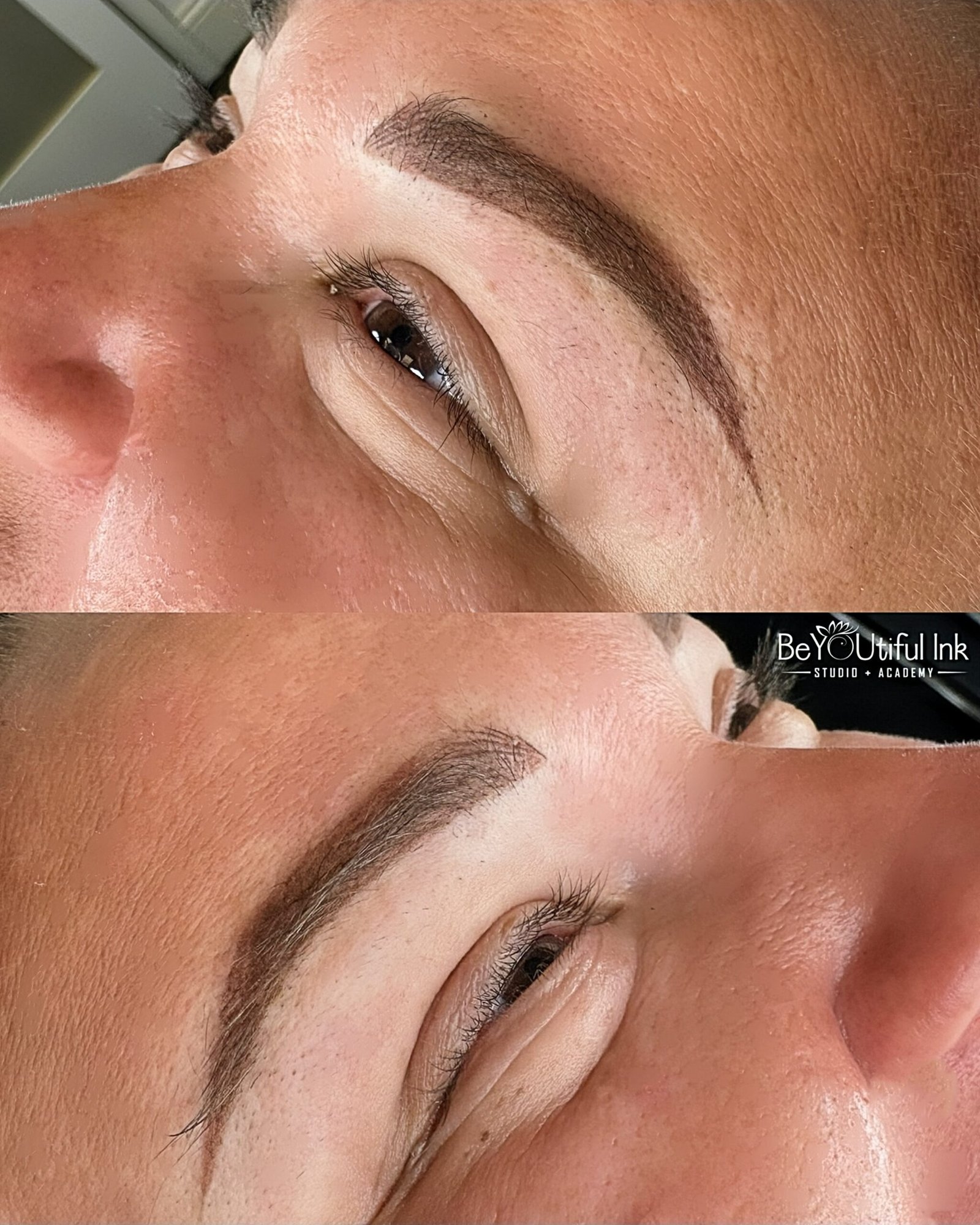
You paid for soft, natural, neutral brows. A year or two later you are looking in the mirror at something distinctly pink, unmistakably orange, or an odd cool gray that does not resemble any eyebrow in nature. If your powder brows turn pink or shift to another unexpected color, you are not imagining it and you have not done anything wrong. It is one of the most common problems we correct at BeYOUtiful Ink Studio, serving Central Minnesota, and it is far more fixable than it looks.
Color shift is also genuinely distressing in a way that fading is not. Faded brows just look soft. Brows that have gone the wrong color look like a mistake on your face every time you catch your reflection. Below we explain exactly why it happens, what each color means about what is in your skin, and what your realistic options are for putting it right.
Why brow pigment changes color at all
Understanding this makes everything else make sense. Brow pigment is not a single color the way paint is. It is a blend of warm and cool pigment components mixed to produce the brown you see, and those components do not break down at the same rate. Cool tones, particularly the blues and greens that neutralize warmth, are generally made of smaller particles that your body clears out faster. Warm tones, especially the oranges and reds derived from iron oxides, are more stable and hang around longer. As the years pass and the cool components disappear first, what remains is increasingly warm. That is the entire mechanism behind most color shift, and it is happening slowly in every set of brows ever tattooed. Good pigment and good technique slow it down considerably. Nothing stops it completely. This is also why the question is rarely whether your brows will change at all, but how far and in which direction. A well-matched pigment drifts a shade or two warmer over three years and nobody notices. A poorly matched one is why powder brows turn pink in a way that is obvious across a room. The mechanism is identical in both cases. Only the starting choices were different.
Why powder brows turn pink or orange
Warmth is by far the most common direction of shift, and it happens for several overlapping reasons. When powder brows turn pink or orange, the usual explanation is simply that the cool components of the original pigment have broken down and left the warm base exposed. This is accelerated when the artist chose a pigment that was too warm for your skin undertone in the first place, which happens often with clients who have naturally warm or golden undertones, since the skin’s own color adds to whatever is sitting in it. Sun exposure speeds the process up considerably, because UV degrades cool pigment components faster than warm ones. Pigment placed too shallow also fades toward warmth sooner. Certain older or lower-quality pigment lines are notorious for it. If your brows started as a nice neutral taupe and drifted steadily toward salmon, this is almost certainly what happened. There is a timing pattern worth noticing too. When powder brows turn pink because of pigment choice, the warmth usually appears within the first year and sometimes as early as the healed result at week six. When they turn pink purely from normal cool-component breakdown, it takes considerably longer, often two to three years. Knowing roughly when you first noticed the change helps us work out which one you are dealing with.
Why some brows turn gray, blue, or ashy instead
The opposite shift is less common but more alarming when it happens. Gray, blue, or slate-toned brows usually mean pigment was implanted too deep. When pigment sits deeper in the dermis, you are viewing it through more layers of tissue, and skin scatters light in a way that makes deeper pigment read cooler and bluer. This is the same optical effect that makes veins look blue through skin when the blood inside them is not. The other cause is a pigment that was too cool or too ashy for the client to begin with, sometimes chosen deliberately to counteract expected warmth and simply overcorrected. Older black-based pigments, which contained carbon, were particularly prone to healing blue-gray as they aged. If your brows look cool and slightly blurred at the edges rather than crisp, depth is the likely culprit rather than pigment choice. Gray brows are worth taking seriously sooner rather than later. Unlike the warm shift you get when powder brows turn pink, which can often be worked over directly, cool depth-related shift generally needs lightening before anything can be built on top. Waiting does not make it easier, and layering more pigment over it in the meantime usually makes the eventual correction harder.
What each color tells us about the fix
The color you are looking at genuinely guides the correction, which is why we ask for photos in natural daylight rather than indoor lighting. Pink and orange brows sit warm, so they can often be neutralized by working over them with a pigment carrying cool or green-based correctors, which cancel the warmth optically. Gray and blue brows are harder, because you cannot make deep pigment shallower and adding warm pigment over cool depth often produces a muddy result rather than a clean one. For those, lightening first is usually the better path. Saturation matters as much as hue, since a faint warm shadow is easy to work over, while a dense saturated orange brow needs lightening before anything else will look right. Shape matters too. If the underlying shape is also wrong, correcting only the color leaves you with a well-colored brow in the wrong place. This is a genuinely common trap. Clients arrive focused entirely on the fact that their powder brows turn pink, and once we map the shape against their features it becomes clear the arch sits too high or the tails drop. Fixing both at once takes longer but produces a result worth having, whereas fixing color alone tends to lead to a second correction later.
Color correction versus saline removal
There are two real routes, and honest studios will tell you which one your brows actually need rather than defaulting to the cheaper or faster option. Color correction works over existing pigment using corrective tones and is appropriate when the old work is relatively light, the shape is acceptable, and the shift is warm rather than cool. It is a single-appointment approach in many cases, sometimes two. Saline removal uses a saline solution to draw pigment upward and out of the skin across several spaced sessions, usually six to eight weeks apart. It is the right choice when pigment is dense, when the color has gone gray or blue, when the shape needs changing, or when there have been multiple layers of previous work. Removal takes patience, typically three to six sessions, and we will give you a realistic estimate rather than an optimistic one. Many clients end up with a combination, lightening first and then rebuilding. Cost is worth mentioning honestly here. A correction is usually priced close to a new set, and a full removal-and-rebuild costs more than either, because it genuinely is more work spread across more appointments. Nobody enjoys hearing that after already paying once. But paying properly to fix it once beats paying three times for someone to layer more pigment over a problem that needed lifting out.
Rebuilding brows that actually stay neutral
Once the canvas is right, the rebuild is where we prevent this from happening again. Pigment selection is the heart of it, and that means matching to your skin undertone rather than to the color you want to see on day one. We work with modern pigment lines with published fade characteristics, so we know which direction a given formula drifts over time and can compensate deliberately from the start. Technique matters too, since correct depth prevents the gray shift and adequate saturation prevents premature warm fading. Powder and ombre shading remains an excellent, durable choice when executed properly. Some clients prefer switching to nano brows for a softer, more hair-like finish, or a combination brow that blends both. You can compare all of them on our eyebrow services page. Sunscreen on healed brows genuinely slows future shift, and it is the one thing clients control entirely. We also photograph your healed result at the perfecting session and keep it on file, so that if you come back in three years we can see exactly how your skin handled that specific pigment rather than guessing. That record is the best protection there is against watching your powder brows turn pink a second time, because the next pigment choice is based on evidence from your own skin rather than an educated guess.
Preventing the next set from shifting
Prevention comes down to a handful of things, and most of them are decided before the needle touches your skin. Ask any artist directly what pigment line they use and how it fades over time, because an artist who cannot answer that is not thinking about year three. Be honest about your skin undertone and let the artist choose accordingly, even if the recommended color looks cooler than you expected in the bottle. Attend your perfecting session, since that is where color is adjusted based on how your skin actually healed the first pass. Wear sunscreen on your brows daily, keep retinol and acids away from them, and book a refresh before the color has degraded rather than years afterward. Clients who follow this rarely see powder brows turn pink at all, and if they drift, they drift gently and predictably. One last piece of prevention is choosing the technique that suits your skin rather than the one in the photos you liked. Oily skin holds shaded work better than fine strokes, mature skin often needs a softer approach, and very fair skin shows warm drift more obviously than deeper skin does. A studio that recommends the same service to everyone who walks in is not accounting for any of this, and that is exactly how avoidable color shift starts.
Fixing color-shifted brows across Central Minnesota
If you are anywhere in Central Minnesota, including Little Falls, Brainerd, St. Cloud, Wadena, or Morrison County, you do not have to live with brows that have gone the wrong color. Kelly assesses the existing pigment, tells you honestly whether correction or removal is the right route, and gives you a realistic number of sessions and a realistic timeline before you commit to anything. We never criticize the artist who did the original work, because pigment technology and training have both moved a long way and plenty of shifted brows were done to the standards of their day. Clients travel to us from across Central Minnesota specifically for this kind of corrective work, and it is genuinely satisfying to do. If your powder brows turn pink, orange, or gray and you want a straight answer about fixing them, come and see us at 62 E Broadway Ave, Suite 101, Little Falls, MN, or book a color correction consultation.
Frequently Asked Questions About Color-Shifted Powder Brows
Why did my powder brows turn pink instead of staying brown?
Almost always because the cool components of the original pigment broke down faster than the warm ones, leaving the warm base exposed. Brown pigment is a blend, and the blues and greens that neutralize warmth are typically smaller particles your body clears out first. This process is accelerated by sun exposure, by pigment that was too warm for your skin undertone to begin with, and by placement that was slightly too shallow. Your own skin undertone adds to whatever is sitting in it, so warm-toned skin makes a warm shift more visible. It is extremely common, it is not a sign that you were scammed, and it is one of the more straightforward shifts to correct.
If my powder brows turn pink, can they be corrected without removing them completely?
Often yes, particularly when the shift is warm and the remaining pigment is relatively light. We work over the existing color using corrective tones that neutralize the warmth optically, which can be done in one or two appointments. Correction becomes unsuitable when the pigment is very densely saturated, when it has gone gray or blue from being placed too deep, or when the underlying shape also needs changing. In those cases lightening first produces a far better outcome than layering more pigment onto a bad base. Kelly will look at your brows in natural light and tell you honestly which category yours fall into.
How many saline removal sessions will I need?
Most clients need somewhere between three and six sessions, spaced six to eight weeks apart to let the skin recover fully between each. The exact number depends on how deeply the original pigment was placed, how saturated it is, how many previous layers of work are in your skin, and how your body responds. Densely saturated or repeatedly worked-over brows sit at the higher end of that range, sometimes beyond it. We would rather quote you a realistic range at the outset than promise two sessions and keep extending. Complete erasure is not always achievable, but getting light enough to rebuild cleanly almost always is.
Will my new brows turn pink again after correction?
Some gradual warming over several years is normal for any brow pigment, but a dramatic repeat of what happened is avoidable. The main safeguards are choosing a pigment matched to your actual skin undertone, placing it at the correct depth, using a modern pigment line with known fade behavior, and completing your perfecting session. On your side, daily sunscreen on the brow area makes a genuine difference, as does keeping retinol and exfoliating acids away from them. Booking a refresh before the color has fully degraded also helps, since we are then adjusting rather than rescuing. Clients who do these things rarely watch their powder brows turn pink a second time.
Do you take brow correction clients from around Central Minnesota?
Yes, and corrective work makes up a significant part of our schedule every week. We see clients from across Central Minnesota, including Little Falls, Brainerd, St. Cloud, Wadena, and throughout Morrison County. Bring clear photos taken in natural daylight rather than indoor lighting, since indoor bulbs distort brow color badly and can make a correction look either better or worse than it is. If you have any record of when the original work was done, how many sessions you had, or what pigment was used, that information genuinely helps us plan. Book a consultation at 62 E Broadway Ave, Suite 101, Little Falls, MN, and we will give you a straight assessment with a realistic session count and cost before you commit.