Stretch marks are one of the most common skin concerns among adults — and one of the most difficult to treat. Creams, oils, and lasers help to varying degrees. But stretch mark camouflage tattooing is a technique that, for the right candidate, can produce truly remarkable results. The key phrase there is: for the right candidate. This technique is genuinely transformative for some people and not appropriate for others, and we believe you deserve the honest version of that story before booking.
At BeYOUtiful Ink Studio in Little Falls, Minnesota, we offer stretch mark camouflage tattooing as part of our paramedical services. This post explains exactly how the technique works, who it works best for, and the factors that determine whether you’re a strong candidate.
What Is Stretch Mark Camouflage Tattooing?
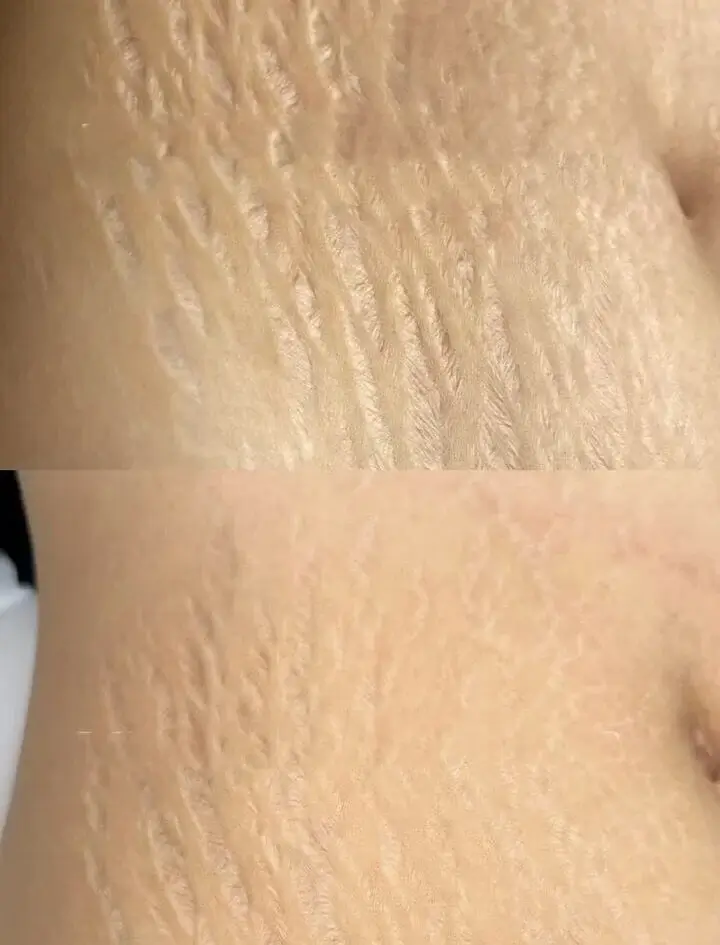
Stretch mark camouflage tattooing — also called skin tone tattooing or corrective pigmentation — is a paramedical technique that uses carefully matched skin-tone pigment to reduce the visual contrast between stretch marks and the surrounding skin. The pigment is tattooed into the lighter-coloured stretch marks using a cosmetic tattoo machine, gradually blending them into the surrounding skin tone so that they become far less noticeable in natural light.
It’s important to understand what this technique is not. Stretch mark camouflage tattooing does not remove or physically change the stretch mark itself — the texture, depth, and structure of the mark remains. What changes is the colour contrast. Because most stretch marks that are visible from a distance are visible because of their lighter colour against surrounding skin, reducing that colour contrast dramatically reduces how much they catch the eye. The result can look extraordinary — especially in motion, in varied lighting, and in daily life.
What Does Stretch Mark Camouflage Tattooing Actually Do?
To understand the technique fully, it helps to understand why stretch marks are visible. Fresh stretch marks are typically red, pink, or purple in tone — they’re visible because they’re darker than surrounding skin. Mature stretch marks are typically white or silver — they’re visible because they’re significantly lighter than surrounding skin. The camouflage tattooing technique is designed specifically for the second category: mature, light-coloured stretch marks.
By tattooing pigment that closely matches the surrounding skin tone into the lighter marks, the contrast is reduced. In good lighting, the marks can become nearly invisible. In harsher or more direct lighting, some visibility may remain — especially if the marks have significant textural variation. Stretch mark camouflage tattooing is not a guarantee of complete invisibility in all conditions. It is a guarantee of dramatically reduced contrast in most everyday situations. Our Scars and Stretch Marks service covers this in full detail.
Who Is the Ideal Candidate for Stretch Mark Camouflage Tattoo?
The ideal candidate for stretch mark camouflage tattooing meets the following criteria:
- Mature, stable stretch marks: Marks should be fully healed and stable — meaning they have stopped changing in colour, size, or texture. This typically requires at least 1 to 2 years of stability. White or silver stretch marks are the strongest candidates.
- Consistent skin tone: The technique works by matching pigment to your surrounding skin. Clients with very consistent, even skin tone around the stretch marks will achieve the most seamless results.
- Realistic expectations: The best candidates understand that camouflage reduces visibility dramatically but does not guarantee complete invisibility in all lighting conditions. Expecting perfection leads to disappointment; expecting dramatic improvement leads to satisfaction.
- Skin that tans consistently: Pigment is matched to your skin tone at the time of treatment. Clients whose skin tone changes significantly with tanning may find the match is not perfect year-round.
- Good overall skin health: Active skin conditions, infections, or ongoing medical treatments affecting the skin in the treatment area need to be resolved before camouflage tattooing begins.
Who Is NOT a Suitable Candidate?
Being honest about who this technique doesn’t suit is just as important as discussing who it does. Here’s when we would not recommend stretch mark camouflage tattooing:
- Recent or active stretch marks: Red, pink, or purple stretch marks are still changing. Tattooing pigment into them now would result in a mismatch as they continue to fade and lighten. Wait until they’ve fully matured to white or silver.
- Very deep textural scarring: When stretch marks have very significant raised or depressed texture, the camouflage technique reduces colour contrast but the textural variation remains visible. Results will still be an improvement, but clients need to understand texture is not changed by pigment.
- Clients who tan heavily and inconsistently: If your skin tone changes dramatically between seasons, maintaining an accurate pigment match year-round is challenging.
- Clients with certain skin conditions: Eczema, psoriasis, or dermatitis in the treatment area, or conditions affecting skin pigmentation, require individual assessment.
If you’re unsure whether you qualify, a consultation at BeYOUtiful Ink in Little Falls is the best first step. Your artist will assess your stretch marks in person and give you an honest assessment of whether the technique is right for you.
What Areas Can Be Treated?
Stretch mark camouflage tattooing can be performed on most body areas where stretch marks commonly occur. This includes the abdomen and stomach area, hips and flanks, thighs and inner thighs, breasts, upper arms, and lower back. Some areas are more complex to treat than others due to how the skin moves, stretches, and tans. Your artist will discuss the specific area you’re concerned about during consultation to give you a realistic picture of expected results for that location.
How Many Sessions Are Needed?
Most clients require 2 to 4 sessions of stretch mark camouflage tattooing to achieve the best result, spaced 8 to 12 weeks apart to allow full healing between sessions. Each session builds on the previous one — adding layers of pigment to deepen the coverage and refine the colour match. The number of sessions required depends on the size of the treatment area, the severity of the colour contrast, and how well your skin retains pigment between sessions. Your artist at BeYOUtiful Ink will give you an estimate after assessing your stretch marks during consultation.
Book Your Stretch Mark Camouflage Consultation in Little Falls
If you’re in Little Falls, Brainerd, St. Cloud, or anywhere in central Minnesota and you’re wondering whether stretch mark camouflage tattooing could help you, the best next step is a consultation. At BeYOUtiful Ink Studio at 62 E Broadway Ave, Suite 101, Little Falls, MN, we offer private, respectful consultations where we’ll give you a completely honest assessment — including telling you clearly if we don’t think the technique is appropriate for your situation.
Explore our Scars and Stretch Marks service and our full range of paramedical tattooing services, or book your consultation online today.
Frequently Asked Questions: Stretch Mark Camouflage Tattoo
1. How long do stretch mark camouflage tattoo results last?
Stretch mark camouflage tattoo results typically last between 2 and 5 years before significant fading requires a touch-up. However, longevity varies considerably depending on the treatment area, how much that area is exposed to sun, your skin type, and your skincare routine. Areas of the body that see significant sun exposure — like the arms or stomach during summer — will fade faster than areas that are typically covered. Using SPF 30 or higher sunscreen on treated areas before any sun exposure is the single most effective way to extend the life of your stretch mark camouflage tattoo results. Annual check-in appointments at BeYOUtiful Ink in Little Falls allow your artist to assess the treated area and recommend top-up sessions at the right time.
2. Does stretch mark camouflage tattooing hurt?
The level of discomfort during a stretch mark camouflage tattoo session varies depending on the location being treated and individual pain tolerance. Areas with thinner or more sensitive skin — like the inner thigh or breast area — tend to be more sensitive than areas like the outer hip or abdomen. Topical numbing cream is applied before treatment at BeYOUtiful Ink to minimise discomfort as much as possible. Most clients describe the sensation as a light scratching or vibrating feeling rather than sharp pain. The procedure is very well tolerated by the majority of clients. Sessions are also paced to ensure you can take breaks if needed, and your artist will check in regularly throughout to ensure you’re comfortable.
3. Will the stretch mark camouflage tattoo pigment match my skin tone perfectly?
Achieving a perfect skin tone match is one of the most technically challenging aspects of stretch mark camouflage tattooing, and it requires an experienced artist with strong colour theory knowledge. Your artist at BeYOUtiful Ink creates a custom pigment blend specifically for your skin tone at the time of treatment — taking into account not just the surface colour but the undertone (warm, cool, neutral) of your skin. It’s worth noting that no pigment match is ever absolutely perfect in every lighting condition. In natural, diffused light, healed results typically look remarkably seamless. In very direct or harsh lighting, subtle variation may be visible. This is why we always advise clients to approach stretch mark camouflage tattooing with realistic expectations — dramatic improvement, not absolute perfection.
4. Can stretch mark camouflage tattooing be done at the same time as other treatments?
At BeYOUtiful Ink in Little Falls, we offer a half-price second service when two treatments are booked together. Clients commonly combine stretch mark camouflage with brow or lip treatments in the same appointment. However, if both treatments involve tattooing or significant skin work, your artist will assess whether your body can comfortably undergo two procedures in the same session without compromising healing quality. For very large stretch mark treatment areas, it may be advisable to keep that as a standalone appointment to allow adequate treatment time and ensure the best possible result. This is always discussed and agreed upon during your consultation before any appointment is confirmed.
5. Are there any risks or side effects of stretch mark camouflage tattooing?
Like all cosmetic tattooing procedures, stretch mark camouflage carries some standard risks that are minimised by proper technique and aftercare. These include temporary redness, swelling, and tenderness in the treated area immediately following the session; the rare possibility of an allergic reaction to the pigment (extremely uncommon with high-quality, certified pigments like those used at BeYOUtiful Ink); infection risk if aftercare instructions are not followed; and the possibility of uneven pigment retention requiring additional sessions. More specific to stretch mark camouflage, scar tissue and stretch mark texture can occasionally cause unpredictable pigment retention in some areas — which is why multiple sessions are built into the treatment plan. All of these risks are discussed transparently during your consultation at BeYOUtiful Ink in Little Falls, and we will always ensure you have a complete picture before proceeding.