A scar can tell a powerful story — a surgery survived, a life delivered, a challenge overcome. But for many people, their scars are also a source of daily self-consciousness. They change the way you dress. The way you feel at the beach. The way you see yourself in the mirror. If you’ve been wondering whether a scar camouflage tattoo can truly make a difference, the honest answer is: for many people, yes — dramatically so.
At BeYOUtiful Ink Studio in Little Falls, Minnesota, we specialise in paramedical tattooing techniques including scar camouflage. This post explains how scar camouflage tattooing works, what scars it’s most effective on, what to expect from the process, and how to tell if you’re a good candidate.
What Is a Scar Camouflage Tattoo?
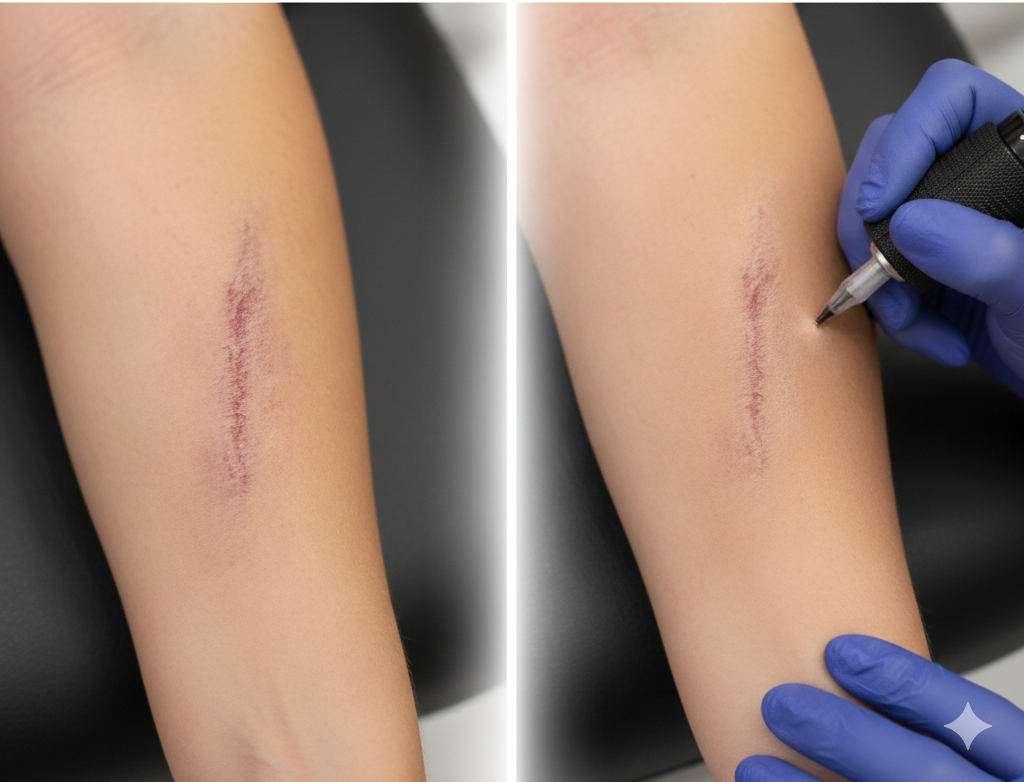
A scar camouflage tattoo — sometimes called skin tone tattooing or corrective pigmentation — is a paramedical technique where skin-coloured pigment is tattooed into scar tissue to make the scar blend more naturally with the surrounding skin. The goal is not to completely erase the scar, but to reduce its visual contrast against the surrounding skin so it becomes far less noticeable in everyday life.
Unlike decorative tattooing that places design over a scar, scar camouflage tattooing uses carefully matched pigment shades to mimic the tone and undertone of your natural skin. When done well, scars can become nearly invisible in daylight — transforming from obvious, discoloured patches into something the eye simply passes over. Our Scars and Stretch Marks service at BeYOUtiful Ink covers a range of scar and pigmentation revision options for clients across central Minnesota.
What Types of Scars Can Scar Camouflage Tattoo Treat?
Scar camouflage tattoo works best on stable, fully healed scars that are lighter in colour than the surrounding skin. This includes surgical scars, C-section scars, tummy tuck and liposuction scars, breast augmentation or reconstruction scars, accident and injury scars, and burn scars.
It’s most effective on hypopigmented scars — scars that are lighter or white compared to natural skin tone. For darker or raised (hypertrophic or keloid) scars, scar camouflage may not be the best primary treatment, and a consultation is needed to assess candidacy. Fully mature scars — typically those that are at least 1 to 2 years old and have stopped changing — respond best to the technique. Newer scars are still healing and may not retain pigment consistently.
Can Scar Camouflage Really Fade C-Section Scars?
C-section scar tattooing is one of the most requested scar camouflage services we receive at BeYOUtiful Ink. A C-section scar runs horizontally across the lower abdomen, often in an area that causes significant self-consciousness when wearing swimwear, low-cut underwear, or intimate clothing. For many mothers in Little Falls and the surrounding area, this scar is a constant reminder of birth — not always in a way that feels empowering.
Scar camouflage tattoo can dramatically reduce the visibility of a mature C-section scar by matching the surrounding skin tone with precision-blended pigment. Multiple sessions are sometimes needed to build sufficient coverage, particularly on scarring that is deeply white or has significant textural change. But the results — when the scar is appropriate for the technique — can be extraordinary. Many clients describe the change as giving them their body back.
What to Expect During Your Scar Camouflage Session
Your scar camouflage tattoo session at BeYOUtiful Ink begins with a thorough consultation. Your artist will assess your scar — its age, texture, colour, and location — and determine whether you’re a strong candidate. A custom skin tone mix is then created by blending multiple pigment shades to match your exact skin tone and undertone. This colour-matching process is one of the most critical parts of the technique, requiring both technical precision and artistic skill.
The pigment is applied using a cosmetic tattoo machine, working in careful passes over the scar area. The number of sessions required varies: lighter scars with minimal texture may only need 1 to 2 sessions, while more extensive or complex scarring may need 3 or more. Touch-ups are always planned after the initial session to refine the result once the skin has healed. Full healing and final pigment settlement takes 6 to 12 weeks per session.
Scar Camouflage Tattoo for Stretch Marks
Stretch mark camouflage tattooing follows the same principle as scar camouflage — pigment is matched to the surrounding skin and applied to the lighter-coloured stretch marks to reduce their visual contrast. Stretch marks on the abdomen, hips, thighs, and breasts are all treatable. Like scar camouflage, this technique works best on mature, stable stretch marks that have lightened to silver or white. Silver-white stretch marks are the most successful candidates; newer red or purple stretch marks are not yet ready for camouflage work.
Book Your Scar Camouflage Consultation in Little Falls
If you’re ready to explore whether scar camouflage tattooing is right for your scars, BeYOUtiful Ink Studio in Little Falls is here to help. We offer private, respectful consultations where your artist will assess your scar carefully, answer all your questions, and give you an honest picture of what results are realistically possible in your specific case.
Explore our Scars and Stretch Marks service or book your consultation online. BeYOUtiful Ink is located at 62 E Broadway Ave, Suite 101, Little Falls, MN.
Frequently Asked Questions: Scar Camouflage Tattoo
1. How long does a scar camouflage tattoo last?
Scar camouflage tattoo results are long-lasting but not truly permanent — most clients see results maintain well for 3 to 5 years before any significant fading is noticed. The longevity depends on your skin type, sun exposure, and how well you protect the treated area from UV damage. Scar tissue tends to hold pigment differently than regular skin — sometimes very well, sometimes less consistently — which is why multiple sessions and touch-ups are often needed to build an even, stable result. Annual check-in appointments at BeYOUtiful Ink in Little Falls allow your artist to assess the treated area and recommend top-up sessions when needed to maintain the camouflage effect over time.
2. Does scar camouflage tattoo hurt?
Scar tissue has variable nerve activity — some scar areas have reduced sensation due to nerve damage from the original injury or surgery, while others can be sensitive. Because scar tissue heals differently from regular skin, the experience of tattooing over a scar varies from person to person. For areas with normal sensation, topical numbing cream is applied before the session at BeYOUtiful Ink to minimise discomfort. Most clients report the scar camouflage tattoo process as very tolerable — significantly less uncomfortable than they anticipated. Sessions are paced carefully by your artist to ensure you remain comfortable throughout.
3. Can all skin tones receive scar camouflage tattooing?
Yes — scar camouflage tattooing is available for all skin tones, but the complexity of colour matching increases with deeper skin tones. For medium to deep skin tones, achieving a precise pigment match requires more blending, more shading layers, and often more sessions than for lighter skin tones. At BeYOUtiful Ink in Little Falls, your artist creates a completely custom pigment blend for each client — no stock colours are used. This bespoke approach ensures the best possible match for your individual skin tone and undertone, regardless of where you fall on the skin tone spectrum. We have experience working with a wide range of skin tones and welcome clients from all backgrounds.
4. How do I know if my scar is ready for camouflage tattooing?
A scar is generally considered ready for camouflage tattooing when it has been fully healed and stable for at least 1 to 2 years. “Stable” means the scar has stopped changing in colour, texture, or size. Scars that are still pink, red, raised, or actively changing are not yet ready — the skin is still in an active healing phase and will not respond well to tattooing. Ideally, your scar should have lightened to white or light silver in colour, as this indicates the skin has finished healing and the camouflage pigment will have the greatest visual impact. If you’re unsure whether your scar is ready, a consultation at BeYOUtiful Ink in Little Falls will give you a definitive answer based on a real in-person assessment.
5. What is the difference between scar camouflage and regular tattooing on a scar?
Regular decorative tattooing on a scar places design, imagery, or patterns over the scar to cover or incorporate it artistically. Scar camouflage tattooing is an entirely different discipline — it uses skin-tone-matched pigment applied in precise layers to make the scar blend invisibly into the surrounding skin. There is no visible design in scar camouflage work; the goal is invisibility, not artistry. Scar camouflage requires specialised training in paramedical tattooing, skin tone analysis, and healing science. It is a medical-adjacent procedure that demands a very different skill set from standard decorative tattooing. At BeYOUtiful Ink, our scar camouflage work is classified under our paramedical tattooing services — and treated with the care and precision that classification demands.