
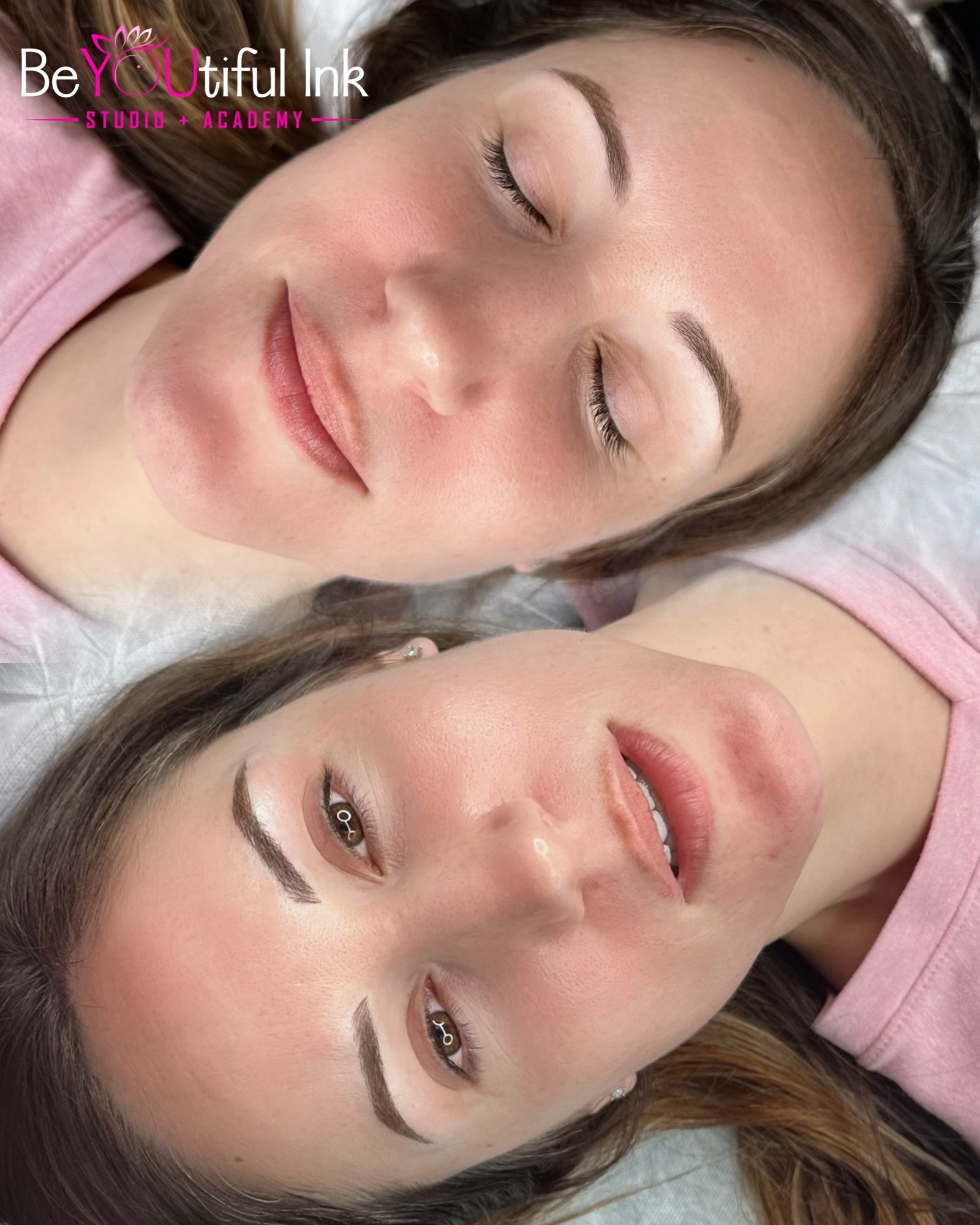
You booked your brows, you loved them for about three months, and now they look like a soft gray shadow of what you paid for. If that sounds familiar, you are not imagining things and you are not doing anything wrong. Microblading fading faster than promised is the single most common complaint we hear from new clients who walk into BeYOUtiful Ink Studio in Little Falls, MN. Here is the part nobody tells you at the consultation: microblading fading is almost never caused by one single thing. It is usually a stack of small factors, and most of them are predictable before you ever sit in the chair.
Kelly has corrected hundreds of brows that faded early, and the pattern is remarkably consistent. Some causes come down to skin biology you cannot change. Some are technique. And some are quietly happening in your bathroom every single morning. Once you know which one is driving your result, the fix usually becomes obvious. Let’s walk through all of them honestly, including the parts the industry tends to skip over, so you can figure out which reason applies to you before you spend money on a redo.
What normal healing looks like versus actual fading
Before we blame anyone, you need a baseline. Fresh microblading looks bold, dark, and crisp for the first week, then flakes and appears to vanish somewhere around day seven to ten. This is the notorious ghosting stage, and it panics almost everyone who goes through it. Pigment then resurfaces gradually over the next two to four weeks as the skin finishes healing above it. If your brows came back at roughly sixty to seventy percent of day-one intensity, that is normal healing, not a problem. Real microblading fading is a different animal: it is a continued, steady loss of color and stroke definition month after month, well past that initial settling period. The clearest way to tell the difference is to photograph your brows in the same light every few weeks. Normal healing plateaus and holds. Genuine fading keeps going, and by month four you can usually see the strokes thinning out at the tail first, since that is where pigment is always applied most lightly.
Reason one: your skin type was never a match for a blade
This is the biggest cause by a wide margin, and it explains most of the cases we see walk through the door. Microblading cuts fine incisions with a hand blade and deposits pigment into those narrow channels. On oily or combination skin with larger pores, active oil glands push that pigment outward and upward as the skin heals over it. The crisp strokes soften, blur into a single shadow, and then fade noticeably faster than they should. On thin, mature, or genuinely dry skin, pigment can hold beautifully for a year or more. On oily skin it rarely does, and no artist alive can override your sebum production. If your forehead is shiny by lunchtime, if you blot or powder through the day, or if your pores are visible through the brow area, microblading fading was very likely written into your result before the first stroke was ever made. This is not a reflection of your skin being bad. Oily skin ages beautifully and wrinkles later. It simply does not cooperate with a blade. A good artist should assess this at consultation and tell you honestly, even when it costs them the booking, because setting the wrong expectation is how microblading fading complaints start in the first place.
Reason two: pigment placed too shallow or too conservatively
There is a narrow depth window in the upper dermis where pigment actually stays put. Go too deep and you get blurring, spreading, and eventual color shift. Go too shallow and the pigment sits in a layer of skin your body sheds within a few weeks. Many artists, especially newer ones, work deliberately light because a brow that heals too dark is a far more visible and far more complained-about mistake than one that heals too soft. That caution is understandable, but it produces microblading fading that becomes obvious around month four. Pigment selection matters just as much, since very light, warm, or heavily diluted pigments simply have less substance to give as they naturally break down over time. If your brows healed noticeably lighter than the photo taken at your appointment and stayed that way, depth or dilution is the likely explanation. This is also the one cause a skilled artist can genuinely correct on a second pass, which is why a proper perfecting session matters so much. Depth is also the reason two people can walk out of the same studio on the same day and get completely different longevity from identical pigment. Skin thickness varies across the brow itself, so the tail and the front often heal at different rates even when the work was done well.
Reason three: the products already sitting on your bathroom shelf
This one genuinely surprises people, and it is why we ask about skincare during every single consultation. Retinol, tretinoin, glycolic and salicylic acids, vitamin C serums, and benzoyl peroxide all work by accelerating cell turnover. That is exactly what you want for your skin and exactly what you do not want anywhere near pigmented brows. If any of those products get applied to your forehead and drift down, or if you use an exfoliating cleanser across your whole face, you are quietly sanding your brows off a little more every day. Chemical peels, microdermabrasion, and at-home dermaplaning do the same thing much faster and much more visibly. Consistent daily retinol use alone can cut brow longevity roughly in half, and most clients have no idea until we ask. You do not have to give up your skincare routine. You just have to apply it below the brow bone and be deliberate about where your cleanser goes.
Reason four: sun, sweat, and central Minnesota living
UV light is the second most efficient pigment remover after exfoliation. It breaks down pigment molecules sitting in the skin the same way it fades a car’s paint on a driveway, and it works year-round here, including reflected glare off snow in February. Add in what an active Minnesota summer looks like around Little Falls, MN, with lake weekends, boat days, yard work, and long afternoons on the water, and you have a lot of unprotected UV landing directly on your brows. Heavy sweating, saunas, hot yoga, and chlorinated pools all compound the problem by softening and flushing pigment out of the skin. A daily mineral sunscreen across the brow area is genuinely the cheapest brow insurance available, and almost nobody uses it. Clients who apply it consistently often get an extra six months out of the same work. A hat helps too, and so does simply remembering that your brows are a tattoo and sunlight treats them accordingly. Tanning beds are worse than natural sun for pigment because the exposure is so concentrated, and self-tanner can stain healing skin unevenly around the brow. None of this means you need to change your summer. It just means brows need the same protection you would give a fresh tattoo anywhere else on your body.
Reason five: you skipped or delayed the perfecting session
Microblading is not a one-appointment service and never has been, no matter how it was sold to you. The six-to-eight week perfecting session exists because healed skin always rejects some pigment unevenly, and that second pass is where density, symmetry, and true saturation actually get built. Clients who skip it entirely, or push it out past four or five months, routinely report microblading fading that looks dramatic and premature. In reality they only ever received half the service they paid for. If you never completed your touch-up, that alone is very likely your entire answer, and the good news is that it is straightforward to correct. The second session is also where an experienced artist adjusts color temperature based on how your skin actually healed the first pigment, which is information nobody has on day one. Skipping it means you never got that correction either. We build the perfecting session into our brow pricing for exactly this reason, so nobody is tempted to skip it to save money and then blame microblading fading for a result that was never finished.
How to stop microblading fading from repeating itself
Here is the honest recommendation, and it is not simply book more microblading. If your skin is oily, combination, or large-pored, repeating the same blade technique will reliably produce the same microblading fading on the same timeline, and you will be right back here in a year feeling the same frustration. Machine-based methods hold dramatically better because pigment is implanted with a needle rather than cut into the skin with a blade. Our Luxury Feather nano brows use an ultra-fine single needle to build hair strokes that survive oily skin far better, while powder and ombre shading has no delicate lines to blur in the first place and is the most durable option we offer. For most clients the real sweet spot is a combination brow, with crisp strokes at the front and soft shading through the body and tail. If your old work has gone patchy or shifted color, we can lighten it first before rebuilding anything. You can compare every option on our eyebrow services page, and if you still want to understand the original technique properly, our 3D microblading page explains exactly who it does genuinely suit.
Fixing faded brows in Little Falls, MN and across central Minnesota
If you live in Little Falls, MN or drive in from Brainerd, St. Cloud, Wadena, or anywhere in Morrison County, you do not have to keep paying to redo the same disappointing result. Kelly starts with an honest skin assessment, tells you plainly whether a blade technique will hold on your skin, and recommends the method that will actually last rather than the one that photographs best on day one. Clients across central Minnesota come to us specifically because someone else told them the truth and they did not want to hear it, and then their brows faded anyway. We would rather have the uncomfortable conversation up front and give you brows that still look right two years from now. You will leave the consultation knowing your skin type, the technique that suits it, a realistic timeline, and what your refresh schedule should look like. There is no pressure to book on the spot, and no upselling into a service your skin does not need. Plenty of clients take the information home, think it over, and come back months later when they are ready. Come see us at 62 E Broadway Ave, Suite 101, Little Falls, MN, or book a brow consultation and we will build a plan that ends the microblading fading cycle for good.
Frequently Asked Questions About Microblading Fading
Is microblading fading after 6 months normal, or did something go wrong?
Some softening at six months is completely normal, but a significant loss of color and definition is not. Well-placed microblading on suitable skin should still look clearly defined at the six-month mark, with gradual softening from there. If your brows have dropped to a faint shadow, the most likely culprits are oily skin, a skipped perfecting session, or daily exfoliating skincare. It is worth reviewing your routine honestly before assuming the work itself was poor, because the answer is often sitting on your bathroom counter. Bring photos from day one and from today to your consultation, since the side-by-side comparison usually tells the whole story immediately.
How long should microblading actually last?
On dry to normal skin with good aftercare and consistent sun protection, expect twelve to eighteen months before a color refresh is genuinely needed. On oily or combination skin, realistically expect eight to twelve months, and sometimes noticeably less than that. Machine techniques such as nano brows or powder shading commonly stretch to two or three years on the very same skin. Anyone promising you three years from microblading on oily skin is overselling, and you should treat that as a warning sign. Longevity is driven far more by your skin type and daily habits than by the price you paid.
Can faded microblading be fixed, or do I have to remove it first?
Most faded work can be corrected directly without any removal, especially if the remaining pigment is still a neutral brown and the original shape is good. We simply rebuild over it with a more durable technique and adjust the color as needed during the appointment. Removal becomes the better path when old pigment has shifted noticeably warm, gray, or blue, or when the shape sits too high, too thick, or clearly asymmetrically. In those cases a few saline lightening sessions give us a clean canvas and a far better final result. Kelly will tell you at consultation which path your brows genuinely need, rather than defaulting to whichever service costs more.
Will nano brows or powder brows stop the microblading fading problem?
For the large majority of clients, yes, and the difference is usually obvious. Microblading fading is largely a consequence of using a blade on skin that pushes pigment around, so switching to a machine technique addresses the actual root cause instead of the symptom. Nano brows implant pigment with a fine needle and hold their definition far longer on oily skin, while powder and ombre shading is more durable still because there are no delicate strokes to blur together. A combination brow gives you realistic texture where it shows most, plus the staying power of soft shading everywhere else. No permanent makeup is truly permanent, but choosing the right method for your skin easily doubles how long your brows look the way you wanted.
Do you correct faded brows from other studios near Little Falls, MN?
Yes, and it is a substantial part of what we do every single week. Clients travel to Little Falls, MN from Brainerd, St. Cloud, Wadena, and throughout Morrison County specifically for correction and color-shift work. We never criticize another artist’s work, we simply assess what is actually in your skin today and map the most reliable route to the brows you originally wanted. Bring clear photos taken in natural light, plus any information you have about the original pigment used, since that helps us plan color correction far more accurately. Book a consultation at 62 E Broadway Ave, Suite 101, and we will give you a straight answer about what is realistic before you commit to anything at all.