Permanent makeup is designed to last — but sometimes, what felt like the right decision at the time no longer suits you. Maybe the technique has faded unevenly. Maybe the shape is no longer flattering. Maybe you had work done elsewhere that you regret. Whatever the reason, saline tattoo removal is one of the most effective, skin-friendly options for lightening or removing unwanted permanent makeup — and it’s a service offered at BeYOUtiful Ink Studio in Little Falls, Minnesota.
This post covers everything: what saline tattoo removal actually is, how it works, what the process involves, how many sessions are needed, what it costs, and how to know if it’s the right choice for your situation.
What Is Saline Tattoo Removal?
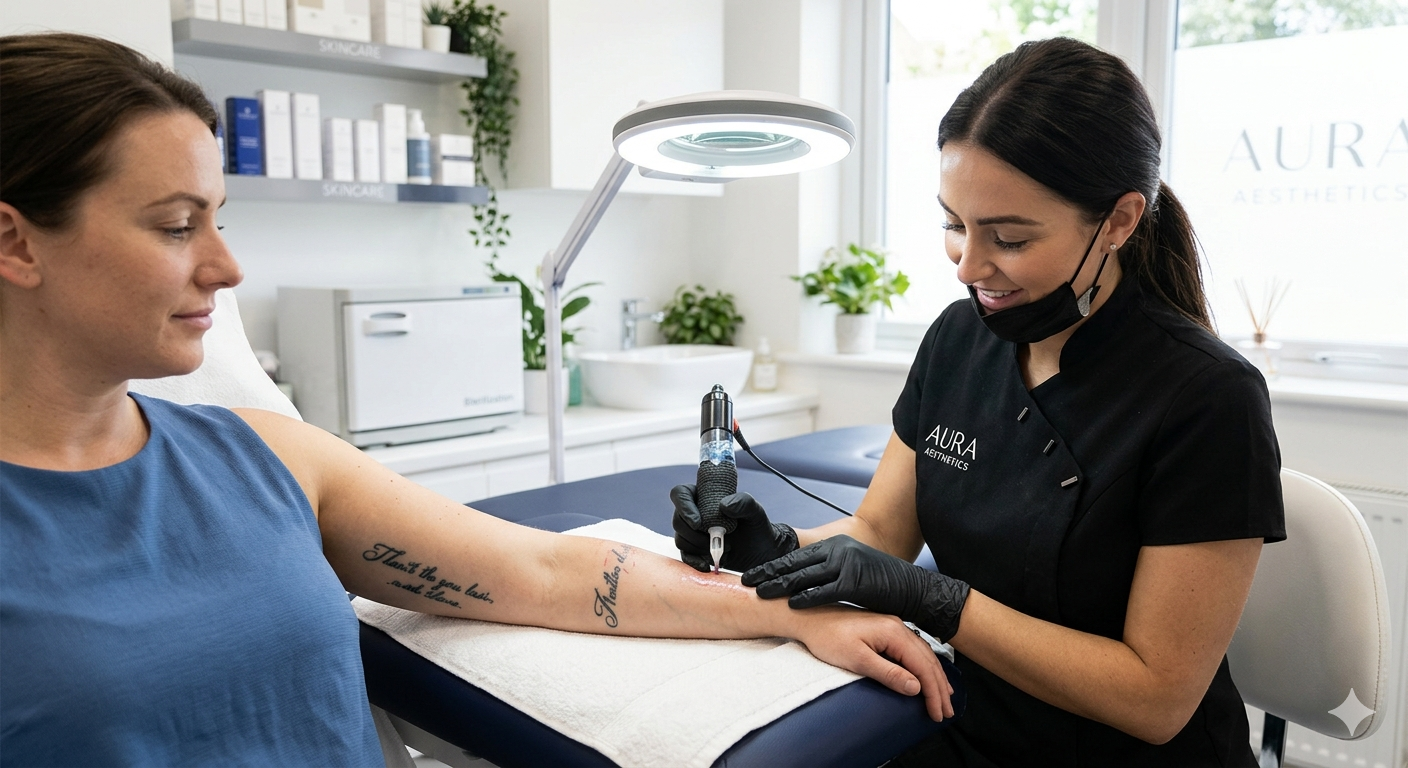
Saline tattoo removal is a non-laser technique for lightening or removing tattoo or permanent makeup pigment from the skin. A specially formulated saline solution is tattooed into the skin over the existing pigment using a cosmetic tattoo machine. The solution works by a process called osmosis — drawing the pigment up from the deeper layers of the skin toward the surface, where it exits the body as the skin heals and scabs over.
It’s a gentle, progressive method compared to laser removal — particularly well-suited to cosmetic pigments used in permanent makeup, which sometimes behave differently under laser treatment than standard tattoo inks. Saline tattoo removal doesn’t burn or destroy tissue the way laser does. Instead, it works with the skin’s natural healing process to gradually extract pigment over multiple sessions.
How Does Saline Tattoo Removal Work, Step by Step?
The saline tattoo removal process at BeYOUtiful Ink begins with a consultation. Your artist will assess the existing tattoo or permanent makeup — looking at the color, depth, age, and area — to determine whether saline removal is appropriate and how many sessions may be needed. A patch test may be recommended for clients with sensitive skin.
During the removal session itself, a numbing cream is applied first for comfort. The saline solution is then tattooed into the skin over the pigmented area using a fine needle. The solution saturates the pigmented tissue and begins the osmotic lifting process immediately. Over the following 7 to 14 days of healing, a scab forms over the treated area. As this scab forms and then naturally lifts away, it takes a portion of the pigment with it. Each session removes a percentage of the pigment — multiple sessions spaced 8 to 12 weeks apart are needed to achieve significant lightening or complete removal.
What Can Saline Tattoo Removal Treat?
Saline tattoo removal is most commonly used on:
- Old or faded permanent makeup: Brows, eyeliner, and lip tattoos that have aged poorly, shifted in color, or simply no longer suit the client’s style.
- Microblading gone wrong: Overly dark, poorly shaped, or blurred microblading that the client wants corrected or removed before starting fresh.
- Uneven or patchy permanent makeup: Areas where pigment has healed unevenly and the result doesn’t look as expected.
- Color-correcting before new work: Lightening old pigment sufficiently to allow a new technique or color to be applied over the top without the old color interfering.
At BeYOUtiful Ink in Little Falls, many clients come to us for saline tattoo removal as a first step before booking a new permanent makeup treatment — lightening the old work to create a clean canvas for fresh results.
How Many Saline Tattoo Removal Sessions Are Needed?
The number of sessions required depends on several factors: the age of the tattoo (older work tends to be closer to the surface and responds more quickly), the color of the pigment (lighter pigments lift more easily than very dark or saturated colors), the depth of the original application, and whether complete removal or just significant lightening is the goal.
On average, clients can expect 3 to 6 sessions for significant lightening of permanent makeup, with sessions spaced 8 to 12 weeks apart to allow full healing between treatments. Complete removal may require additional sessions. Clients who simply need to lighten old work enough to apply corrective new work on top often achieve their goal in 2 to 3 sessions.
Does Saline Tattoo Removal Hurt?
Saline tattoo removal is comparable in sensation to having a tattoo applied — which makes sense, since the same type of machine is used. A topical numbing cream is applied before every session at BeYOUtiful Ink to minimise discomfort. Most clients describe the sensation as mild scratching or pressure rather than sharp pain. The treated area will be tender for a few days after the session as the skin heals and the scab forms. Following aftercare instructions carefully during this healing period is essential to getting the best pigment lift from each session.
How Much Does Saline Tattoo Removal Cost?
The cost of saline tattoo removal varies depending on the size of the area being treated and the number of sessions required. Single sessions are typically priced per area, and package rates for multiple sessions are often available. At BeYOUtiful Ink in Little Falls, we provide transparent, honest pricing during consultation and are always happy to give you a clear picture of expected total investment before you commit to a removal plan. The overall cost of saline removal is generally lower than laser removal for cosmetic tattooing, and it carries fewer risks of hypopigmentation or skin texture changes in the treated area.
Saline Removal vs Laser Removal: Which Is Better for Permanent Makeup?
Both methods are effective, but they work differently and suit different situations. Laser removal uses concentrated light energy to break up pigment particles — it’s fast and highly effective on standard tattoo inks, but cosmetic pigments sometimes contain ingredients that can oxidise under laser treatment, temporarily darkening before lightening. Saline removal is a more gradual process but avoids this oxidation risk and tends to be gentler on delicate areas like the brow and eyelid. For permanent makeup specifically — particularly brows, liner, and lip tattoos — saline tattoo removal is frequently the safer, more predictable first choice.
Book Your Saline Tattoo Removal Consultation in Little Falls
If you have old or unwanted permanent makeup that you’d like to lighten or remove, BeYOUtiful Ink Studio in Little Falls, MN is here to help. Located at 62 E Broadway Ave, Suite 101, Little Falls, MN, we offer private consultations where we’ll assess your existing work and give you an honest, personalized removal plan with clear expectations at every step.
Explore our permanent makeup services and new services at BeYOUtiful Ink, or book your saline tattoo removal consultation today.
Frequently Asked Questions: Saline Tattoo Removal
1. Is saline tattoo removal safe for all skin types?
Saline tattoo removal is generally safe for all skin types, including sensitive skin, but the approach may need to be adjusted based on individual skin characteristics. Clients with darker skin tones should discuss saline removal carefully with their artist, as any tattooing process carries a small risk of post-inflammatory hyperpigmentation in deeper skin tones — meaning the treated area can temporarily become darker during healing before lightening. Ensuring sessions are properly spaced and healing is complete before retreating significantly reduces this risk. At BeYOUtiful Ink in Little Falls, we assess each client’s skin type thoroughly during consultation and may recommend a test patch before proceeding with a full saline tattoo removal session for clients with sensitive or reactive skin.
2. What aftercare is needed after saline tattoo removal?
Aftercare for saline tattoo removal is critical to achieving the best pigment lift from each session. In the 7 to 14 days following treatment, keep the area clean and dry. Allow the scab that forms to shed completely on its own — this is the most important rule. The scab is carrying the lifted pigment out of the skin. Picking it off prematurely removes less pigment and can cause scarring. Avoid swimming, saunas, and excessive sweating during healing. Apply the aftercare ointment provided by your artist in a thin layer to keep the healing skin moisturised without suffocating it. Avoid direct sun exposure on the treated area, and apply SPF once the scab has fully resolved. At BeYOUtiful Ink in Little Falls, we provide a full written aftercare guide with every saline tattoo removal session.
3. Can I have new permanent makeup applied over an area being treated with saline removal?
Yes — this is actually one of the most common reasons clients come for saline tattoo removal at BeYOUtiful Ink. The goal is to lighten the old permanent makeup sufficiently to create a better canvas for new work. The new permanent makeup cannot be applied during or immediately after removal sessions — the skin needs to be fully healed between each removal session, and typically a waiting period of 8 to 12 weeks after the final removal session is recommended before new permanent makeup is applied. Your artist at BeYOUtiful Ink in Little Falls will help you plan the timing of your removal and new treatment sessions so that the transition from old to new work is as seamless as possible and delivers the best possible result.
4. Will saline tattoo removal leave a scar?
When performed correctly by a trained professional and when aftercare instructions are followed carefully, saline tattoo removal should not leave scarring. The technique works within the same depth of skin as the original tattoo, and the healing process — while it does involve scabbing — is a natural, controlled skin response rather than tissue destruction. The most common cause of scarring from saline removal is picking the scab before it is ready to shed naturally, which is why this is the most emphasized aftercare instruction. Clients who are prone to keloid scarring should discuss this history with their artist at BeYOUtiful Ink before booking, as any procedure involving skin penetration carries a slightly elevated risk of keloid formation in this population.
5. How long do I need to wait between saline tattoo removal sessions?
A minimum of 8 weeks is needed between saline tattoo removal sessions — 10 to 12 weeks is often recommended to allow complete healing and accurate assessment of the pigment lift achieved in the previous session. Retreating too soon, before the skin has fully healed, risks skin damage and does not improve the speed of removal — the pigment that was lifted in the previous session needs time to fully exit the body through the natural healing process before the next session can effectively address the remaining pigment. At BeYOUtiful Ink in Little Falls, we schedule all saline tattoo removal sessions conservatively to protect your skin and ensure the maximum pigment lift from each individual session rather than rushing the process.