Less noticeable
doesn't have to
mean invisible.

Licensed Minnesota Tattoo Technician

Natural by Design

Cosmetic + Restorative

Little Falls, MN
UNDERSTANDING YOUR SKIN
Color and texture are different concerns.
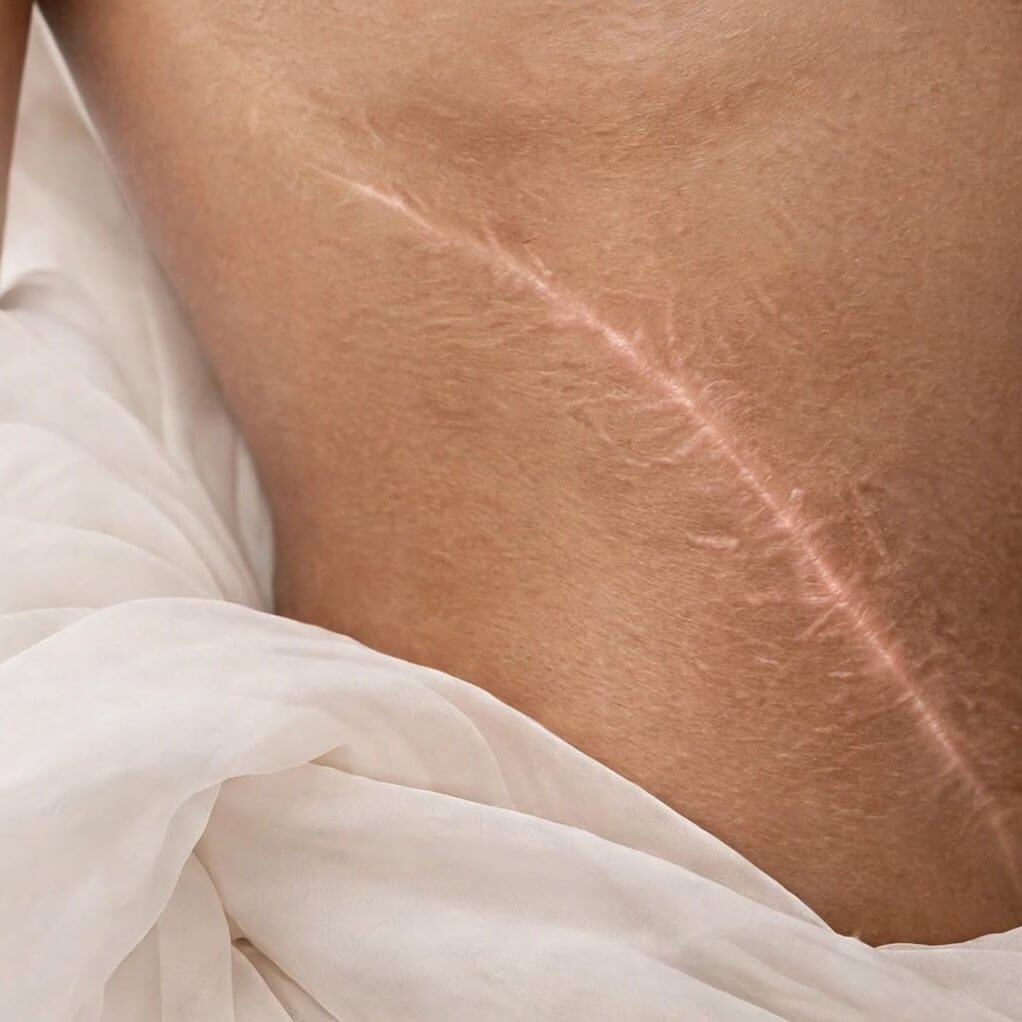
Scars and stretch marks can affect the skin in different ways. Some concerns are related to texture, while others involve loss of color or pigment. In many cases, a combination of approaches provides the best results.
Texture
Inkless Scar Revision | Before & After
Actual client · Scar above the eyebrows
Raised, indented or uneven texture can often be softened with inkless scar revision through targeted needling treatments.
Color
Sun Spot Camouflage | Before & After
Actual client · Pigment camouflage
When color is the primary concern, customized pigment can be used to camouflage the area and create a more even, natural appearance.
TREATMENT OPTIONS
Thoughtful approaches. Individualized results.
Every treatment plan is customized based on your skin, the type of scar or stretch mark, and your goals. Sometimes a combination of techniques provides the best outcome.
Inkless Scar Revision
Targeted inkless techniques designed to improve the appearance and texture of suitable scars, supporting smoother-looking skin over time.
Scar Camouflage
Stretch Mark Restoration
Options include inkless revision to improve texture and pigment camouflage to blend discoloration—based on your skin and goals.
MY APPROACH TO RESTORATIVE TATTOOING
Not every scar needs pigment. Not every concern needs treatment.
I take a conservative, skin-first approach. During your consultation, I’ll assess your skin, discuss your goals, and determine which technique—or combination of techniques—may provide the most natural-looking, long-term results for you.
CANDIDACY + EXPECTATIONS
Is restorative tattooing right for you?
During your consultation, we’ll review your medical history, skin condition and goals to determine the most appropriate treatment options. Not all scars or stretch marks are the same, and results can vary based on skin type, tissue and healing.
Consultation Required
REVIEW YOUR GOALS, SKIN AND OPTIONS
Realistic Expectations
IMPROVEMENT, NOT PERFECTION
Safe & Conservative Approach
FOCUSED ON SKIN INTEGRITY
Individual Treatment Plans
BASED ON YOUR UNIQUE CONCERNS.
FREQUENTLY ASKED QUESTIONS
Quick Answers
How many treatments will I need?
The number of treatments depends on the type of scar or stretch mark, its age, texture, location and how your skin responds.
Inkless scar revision often requires a series of treatments, commonly 1–3 sessions, although some areas may need additional sessions. Scar camouflage may also require more than one appointment to achieve a balanced result.
During your consultation, I’ll evaluate your skin and recommend a personalized treatment plan. My goal is to make meaningful improvements without performing unnecessary treatments.
Does it hurt?
Most clients find restorative tattooing and inkless revision manageable, although sensitivity varies depending on the area being treated and the condition of the tissue.
Some areas may feel more sensitive, while scar tissue with reduced sensation may feel very little.
I’ll explain what to expect before your appointment, discuss comfort options when appropriate, and work conservatively to protect your skin.
How soon can I be treated?
Scars and stretch marks must be fully healed and stable before treatment.
For many scars, this means waiting approximately 12 months after the original injury or surgery, although some may require longer. Treatment timing depends on the scar’s maturity, color, texture, location and your overall healing.
Certain medical conditions, medications and ongoing treatments may also affect candidacy.
During your consultation, I’ll evaluate whether your skin is ready or whether waiting would provide a better long-term outcome.
What results can I expect?
The goal of restorative tattooing is improvement—not complete removal or perfection.
Inkless revision may help soften the appearance of uneven texture, while scar camouflage can help reduce visible color differences between the scar and surrounding skin.
Results depend on your skin, the type and maturity of the scar, the treatment selected and your individual healing response.
Scars and stretch marks may become less noticeable, but they will not necessarily disappear. I’ll always discuss realistic expectations before recommending treatment.
Are there any contraindications?
Yes. Certain conditions can make restorative tattooing or inkless revision unsuitable or require postponing treatment.
Examples include active skin infections, open wounds, unhealed or unstable scars, certain inflammatory skin conditions, a history of problematic scarring, and some medical treatments or medications that affect healing.
Clients who are pregnant, undergoing certain cancer treatments, or experiencing compromised healing may also need to postpone treatment or obtain medical clearance.
A thorough consultation is required so I can review your medical history, evaluate the treatment area and determine whether proceeding is appropriate.
Your skin’s health and safety will always come before a cosmetic result.
Can hypertrophic scars and keloid scars be treated?
Not all raised scars are the same. Hypertrophic scars remain within the boundaries of the original injury, while keloid scars extend beyond those boundaries and may continue to grow.
Some mature, stable hypertrophic scars may be candidates for inkless scar revision, depending on their condition and your medical history. Keloid scars, however, require special consideration because additional skin trauma can stimulate further scar formation.
During your consultation, I’ll evaluate your scar, discuss your history of abnormal scarring, and determine whether restorative tattooing is appropriate or whether a referral to a dermatologist would be a safer option.
READY TO EXPLORE YOUR OPTIONS?
Your skin deserves an individualized approach.
Schedule a consultation to discuss your concerns, ask questions and create a plan that’s right for you.
Color and Texture Are Different Problems
An area may be noticeable because it is lighter, darker, redder, raised, indented, shiny, texturally different or a combination. Pigment cannot remove texture, and pigment is not automatically the right solution for every visible difference.
Scar Restoration
Selected pigment-free restorative approaches may be considered for appropriately healed and carefully selected scar tissue when texture contributes to the concern. This is not physician-performed surgical scar revision, and it should not be described as removing scars, recreating normal skin or guaranteeing a biological response.
Scar Camouflage
Scar camouflage uses customized tattoo pigment to reduce visible color contrast between an appropriately healed lighter scar and the surrounding skin. The scar and its texture remain. A perfect year-round color match should not be promised because natural skin changes and tans differently than tattoo pigment.
When Is a Scar Ready?
There is no single anniversary that makes every scar ready. Kelly considers color, texture, stability, tissue integrity, inflammation, healing history, location, previous treatments, planned procedures and individual healing considerations.
Stretch Mark Restoration
Stretch marks may be noticeable because of texture, color or both. A pigment-free approach may be considered when texture is the primary concern; camouflage may sometimes be considered when stable stretch marks are lighter than the surrounding skin. Neither approach should be described as erasing stretch marks or regenerating perfect skin.
Tummy Tuck + Belly Button Concerns
After abdominal surgery, scars, stretch marks and belly-button appearance may represent different concerns. When appropriate, tattoo artistry may create the visual appearance of depth and definition at the belly button using color, light and shadow, but tattooing does not physically reconstruct missing anatomy.
What Restorative Tattooing Cannot Promise
- Remove a scar or stretch mark
- Recreate normal skin
- Eliminate texture
- Create a perfect skin-tone match
- Match equally in every season
- Guarantee a particular number of sessions
- Guarantee a specific percentage of improvement
Assessment + Safety
Kelly begins with what the client sees and what result would feel meaningful. Unexplained or changing pigment loss, suspicious lesions or tissue that appears unstable should be appropriately evaluated rather than simply tattooed over.
Sometimes the most responsible recommendation is to wait, pursue additional healing or medical evaluation, or decide that tattooing is not the appropriate treatment at all.

Luxury cosmetic + restorative tattooing with an uncompromising commitment to natural results, skin integrity, and genuine care.
Explore
- Nano Brows
- Eyeliner
- Lip Blush
- Restorative Tattooing
- Aesthetics
Visit
- 62 E Broadway Ave, Suite 101
- Little Falls, MN 56345
- (320) 360-5605
Connect
-
@beyoutifulinkmn
Instagram + Facebook - Book Online